EQC Trends — August 31, 2026 Edition
The technical quality of a development is not defined solely on the construction site. It begins with an understanding of the market segment that supports the asset, extends through design and implementation decisions, and continues into the administrative and financial management that structures its operation. Treating these stages as isolated workstreams creates a disconnect between what was planned and what the asset ultimately delivers.
In August, EQC managed initiatives at different stages of this cycle: technical monitoring of the logistics complex in Cajamar, São Paulo, and field documentation for three logistics developments in Extrema, Minas Gerais; São José dos Pinhais, Paraná; and Jacareí, São Paulo. The period also included content dedicated to Real Estate BPO, EQC’s methodology for the administrative and financial management of developments, as well as the leadership development program created in partnership with Time Produtivo. During the same period, the company launched the EQC Intelligence | Self Storage series, dedicated to analyzing a market segment worth approximately US$47 billion in the United States.
This edition brings together the period’s key operational highlights alongside the concepts that guide the company’s work as Owner’s Engineering.

Engineering Beyond the Construction Site: The Asset as a Continuous Cycle
Our role as Owner’s Engineering does not end when construction is completed. Before construction begins, there is the analysis of the market segment and asset typology that support the development’s feasibility; afterward, there is the administrative and financial structure that keeps operations under control. Between these two points, field execution is the most visible stage, but it is not the only stage in which value can be preserved or lost.
In August, the initiatives led by EQC reflected this full scope: market analysis, construction management, field monitoring, administrative management, and technical team development. The common element is methodology: the same discipline applied to interface control, information traceability, and well-founded technical decision-making, adapted to the nature of each workstream.
The asset does not begin with the foundation or end with the occupancy permit; the engineering that supports it must have the same scope.
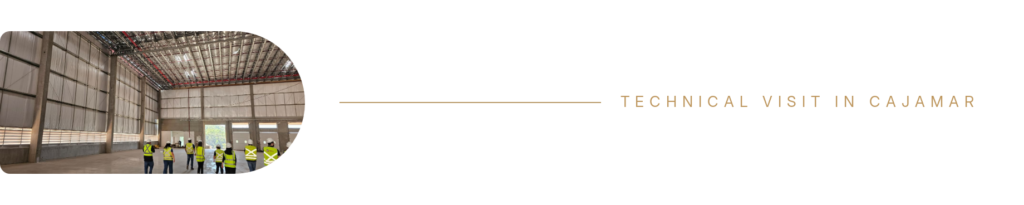
Technical Monitoring in Cajamar, São Paulo
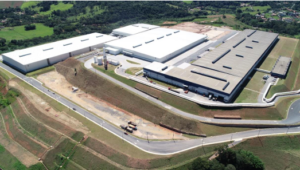
EQC conducted a technical visit to the AAA-standard logistics complex in Cajamar, São Paulo, accompanied by Project Manager Jorge Henrique. The visit documented the progress of construction and the company’s role in the technical management of the development.
In this type of work, continuous on-site monitoring serves a specific purpose: anticipating execution challenges, supporting communication among the teams involved, and ensuring that technical decisions remain aligned with the objectives established for the asset. Physical presence is what turns field documentation into useful information for decision-making.
On-site presence only creates value when it leads to decisions; otherwise, it is merely documentation.
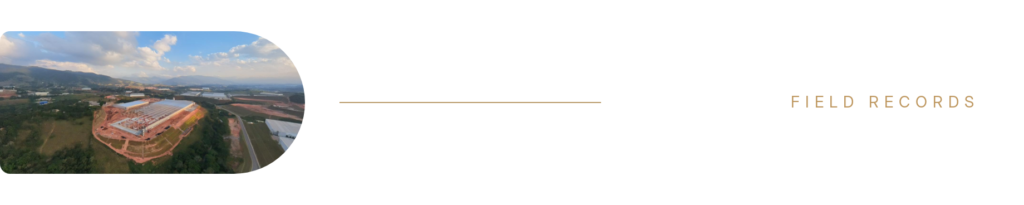
Field Records | Extrema (Minas Gerais), São José dos Pinhais (Paraná), and Jacareí (São Paulo)
This month’s project roundup brought together three logistics developments under EQC management. In Extrema, Minas Gerais, construction is progressing across simultaneous work fronts involving earthworks, deep drainage, foundations, precast assembly, steel structures, base preparation, industrial flooring, as well as electrical and fire protection systems. In São José dos Pinhais, Paraná, the preliminary handover inspection for Phase 01 was carried out. In Jacareí, São Paulo, the Capitânia Jacareí project is advancing with earthworks, roof steel structure assembly, and the installation of lateral enclosures.
The three developments are at different stages of their schedules, which requires different forms of technical oversight: coordination among simultaneous disciplines in Extrema, compliance verification during the inspection in São José dos Pinhais, and sequencing control in Jacareí. Standardizing the management methodology is what makes it possible to maintain the same level of control across projects of different phases and scales.
A portfolio of projects is managed through methodology, not proximity: the discipline remains the same at every stage.

Real Estate BPO | Administrative and Financial Management of the Development
EQC has structured Real Estate BPO, its proprietary methodology focused on the administrative and financial management of developments. The model integrates standardized processes, technology, and a specialized team, covering financial management, administrative routines, recruitment and selection, as well as tax and accounting support.
Managing a development is not limited to the technical monitoring of construction. Failures in administrative and financial controls can produce the same effects as execution deviations: loss of traceability, decisions based on incomplete information, and direct impacts on asset performance. Structuring this area with the same rigor applied to engineering strengthens governance and predictability throughout the entire development life cycle.
Governance that does not extend to administrative support functions is only partial governance.

EQC Intelligence | Self Storage: An Emerging Market Segment in Consolidation
In August, EQC launched the EQC Intelligence | Self Storage series, dedicated to analyzing a property type that is gaining traction in Brazil’s real estate market. Recognized by PwC and the Urban Land Institute (ULI) as one of the sector’s most resilient segments, self storage represents an approximately US$47 billion market in the United States and is already familiar to 58% of São Paulo residents.
The growth of this model reflects tangible changes in how urban space is used: more compact properties, new residential and business storage needs, and the adaptive reuse of existing buildings. From an engineering perspective, these characteristics translate into design decisions involving space utilization, circulation and operational flows, infrastructure and building systems, adaptation of existing structures, and coordination among disciplines throughout implementation.
Early analysis of emerging property types is part of the technical process. Understanding how a segment operates before developing it is what makes it possible to define project assumptions aligned with the asset’s expected performance.
Every new real estate product requires, first and foremost, an understanding of a new set of technical knowledge and constraints.
Leadership Development | Partnership with Time Produtivo
EQC is developing, in partnership with Time Produtivo, a proprietary leadership development program focused on strengthening competencies in people management, feedback, team development, and strategic leadership.
In engineering companies, execution capacity is limited by coordination capacity. Portfolio growth requires leaders who are prepared to guide technical teams, maintain delivery standards, and preserve the consistency of the methodology as new workstreams are introduced.
Management adds value when it moves beyond inspection and becomes governance.