March brought significant developments across stages that directly influence execution quality: pre-construction, process organization, physical and financial control, and technical monitoring of developments at different stages.
From permitting diagnostics and the automation of internal routines to the analysis of physical and financial project performance and the management of more complex developments, the period reinforced a core principle of EQC’s approach: predictability does not depend solely on construction progress, but on the structure that supports every decision throughout the process.
In this edition, we highlight some of the month’s key topics and how they connect planning, governance, and execution.
Technology Applied with Method and Continuity
Rodrigo Menossi’s participation in the International Builders’ Show (IBS), held in the United States in February, broadened EQC’s perspective on solutions already established in the international market, particularly in technology, automation, and software integration for the construction industry.
This knowledge also connects with internal initiatives observed throughout March. The implementation of automated workflows for recurring stages has helped strengthen operational consistency in routines that require continuous monitoring, reducing manual controls, preserving historical records, and improving the flow of information.
Applied technology must reinforce methodology, clarity, and operational continuity.
Technical Structuring Before Execution Begins
The permitting assessment also stood out during the period as a decisive pre-construction stage. Before execution begins, EQC structures the legal and operational requirements needed to move the development forward with greater technical security and stronger planning capacity.
This work includes mapping required permits and approvals, defining project stages, identifying risks, and developing a high-level schedule. When these workstreams are organized from the outset, decision-making becomes more consistent and the development progresses on a more stable foundation.
Successfully delivering a development begins with the technical organization of its initial stages.
Technical Assessment to Restore Project Coherence
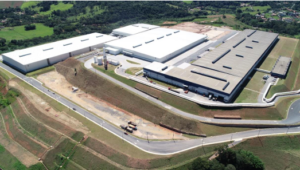
Another relevant focus in March was the physical and financial rebalancing of a logistics project under EQC’s management. On-site progress was moving at an accelerated pace, while the disbursement schedule was not keeping up at the same rate. The technical analysis identified a mismatch between execution, progress measurements, and the approved cash flow.
Based on an assessment of SPI, the S-curve, procurement, payments, and contractual milestones, the work focused on restoring coherence between construction progress and the financial structure. The same principle was reflected in another topic addressed during the period: invested capital requires structured management. In real estate developments, schedule, cost, risk, and quality must remain under technical control to sustain predictability, traceability, and sound decision-making throughout the entire project life cycle.
Physical progress must remain aligned with the project’s financial and contractual framework.
Structured Management for a Unique-Use Development
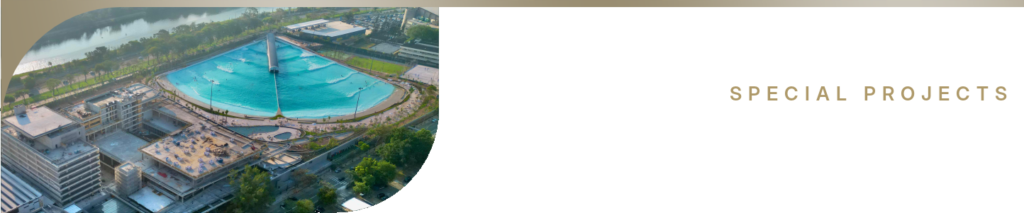
Among the month’s highlights, Beyond The Club reinforced EQC’s role in unique-use, highly complex projects. Located on Marginal Pinheiros in São Paulo, the development requires continuous technical coordination across multiple interfaces involving design, procurement, and execution.
EQC’s scope includes pre-budgeting, pre-construction, contractor bidding, full construction management, and administrative management. The project also presents significant challenges, including complex permitting, soil stabilization to support the pool structure, and logistics management for imported equipment and materials.
At its current stage, the project is progressing through the final phase of construction. Managing a development of this nature requires continuous technical analysis, integration among all parties involved, and rigorous control of the execution stages.
Unique projects require continuous coordination, technical control, and structured management of interfaces.