In April, we reinforced a conviction that guides everything EQC does: the quality of a project’s delivery is built before construction advances. It lies in cost management methods, the governance applied to contracts, technical oversight in the field, and the development of professionals prepared to represent the owner’s interests.
Well-founded decisions reduce risks, preserve capital, and increase predictability. Weak decisions create room for rework, additional costs, and loss of value. The difference between one scenario and the other is rarely found in the construction itself. It lies in the technical structure that supports each decision.
This edition brings together the main developments of the period and shows how this approach was reflected in practice across different areas of operation.

PMI (PMBOK) + AACE: The Combination That Turns Data into Decisions
When it comes to cost management in engineering projects, two international references stand out. The PMBOK®, developed by PMI, structures budget control in an integrated manner with scope, schedule, and quality. AACE International provides deeper technical guidance on estimating, cost detailing, and resource efficiency.
Relying on only one of these approaches limits delivery potential. That is why, at EQC, we integrate both. From PMBOK®, we apply budget control aligned with schedule and scope. From AACE, we use detailed technical methods for estimating and financial planning. This combination increases decision-making confidence, especially in projects with tight margins or high technical complexity.
Cost control is not about monitoring spreadsheets. It is about understanding the scenario, anticipating risks, and making decisions based on structured data.
Method is what turns technical reference into consistent decision-making.

CAJ LOG | AAA-Standard Logistics Development in Three Phases
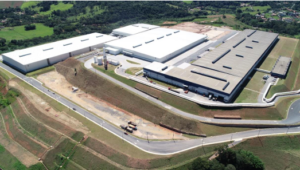
Among April’s highlights, EQC reinforced its role in large-scale logistics projects with CAJ LOG, in Franco da Rocha, São Paulo. With 230,000 m² of built area, the development is being carried out in three simultaneous phases under EQC’s full project management.
The main technical challenges include an aggressive schedule, earthworks involving highly complex geotechnical conditions, and electrical infrastructure, including network extension, power connection, and regulatory approvals. An operation of this scale requires continuous technical coordination, execution control, and integrated management across multiple simultaneous implementation fronts.
In large-scale projects, predictability comes from coordination across multiple work fronts.

Management of a Logistics Development in Extrema
On-site construction monitoring is a fundamental part of EQC’s management approach. In April, we documented the progress of construction management activities in Extrema, Minas Gerais, currently in the structural steel and earthworks phases.
Technical assessment of on-site progress, combined with control of interfaces between disciplines, makes it possible to identify deviations early, validate productivity, and maintain schedule compliance. Field documentation is not retrospective reporting. It is an active input for decision-making.
Close monitoring is the most effective way to anticipate challenges.

FEICON 2026 | Tracking Industry Trends and Solutions
EQC Engenharia attended FEICON 2026, an event that opens Brazil’s construction and architecture calendar. Among the main highlights, we observed the dynamic nature of the building materials market, the growing presence of international players, and the advancement of technologies focused on artificial intelligence and sustainability.
Keeping pace with the industry’s evolution is part of EQC’s commitment to continuous technical development. Events such as FEICON broaden the knowledge applied to day-to-day project activities and strengthen the company’s ability to identify trends that influence strategic decision-making.
Being present where the industry evolves is part of keeping our methodology evolving as well.

49th In-Person We Share | Alignment and Recognition
The 49th In-Person We Share, EQC’s quarterly team gathering, brought the entire team together to present results, share key initiatives, recognize achievements, and strengthen team connections through awards and moments of celebration.
The in-person gathering is where the learning developed and shared over the preceding months becomes collective alignment. It is also the space where the culture built every day across projects and processes comes to life through a shared experience.
Culture is sustained when the team recognizes itself as part of the methodology.

Periodic Building Inspection and LITE
The mandatory implementation of Periodic Building Inspections and the Building Technical Inspection Report (LITE), currently under consideration by the Brazilian Senate, represents a significant step forward for the technical governance of real estate assets in Brazil. By institutionalizing regular inspections, greater control is established over regulatory compliance, building conditions, and operational efficiency, helping reduce risks and preserve asset value throughout the property’s life cycle.
EQC Engenharia’s team is qualified to prepare detailed LITEs, providing accurate assessments and structured monitoring protocols that ensure technical consistency and qualified support for decision-making.
Technical compliance is an essential part of preserving an asset’s value.

Risks Do Not Begin During Construction
In real estate development, risk does not begin on the construction site. It begins with the structure that supports decision-making. In most cases, financial deviations are the result of poorly structured contracts, weak budget assumptions, misalignment between cost, schedule, scope, and quality, and the absence of consistent technical oversight.
EQC’s role as Owner’s Engineering integrates cost management with the contractual framework to protect invested capital. This includes critical analysis of contractual terms, review of budget assumptions, physical and financial monitoring, technical assessment of claims and change orders, and proactive risk management.
Cost management is not about controlling spreadsheets. It is governance applied to engineering.
What protects a development’s profitability is the structure behind its decisions.