The outcome of a development is determined by the technical decisions made at each stage of the project. The governance structure established before construction begins is critical to ensuring predictability during execution. Without this technical foundation, rework is more likely to occur throughout subsequent phases.
In May, EQC managed projects of different scales and levels of complexity, including a 500 m² corporate fit-out, a 78,000 m² development on Marginal Pinheiros, logistics projects, mixed-use buildings, and on-site technical monitoring. Across all fronts, EQC applied the same level of technical rigor and strategic vision to each development.
This edition presents EQC’s main operational highlights for the period. The following sections provide further details on ongoing projects, technical activities on-site, and the team’s internal agenda.

Owner’s Engineering in Action
In real estate development projects, technical, operational, and strategic decisions directly impact execution efficiency, asset performance, and the preservation of invested capital throughout the entire lifecycle of the development. EQC operates as Owner’s Engineering, managing the project from the investor’s perspective and ensuring that every decision is aligned with business objectives and the asset’s value creation.
EQC’s approach is structured around three integrated areas. The first involves the technical assessment of strategic decisions, including the evaluation of constructability and the impacts on cost, schedule, and operational performance. The second focuses on the implementation of governance, monitoring, and control mechanisms throughout the entire project lifecycle, aimed at increasing execution predictability and preserving invested capital. The third is related to construction operational efficiency, with solutions designed to optimize execution and improve overall project performance.
Owner’s Engineering goes beyond the technical management of construction by integrating strategy, governance, and operational intelligence into the management of the development, providing qualified technical support for decision-making throughout every stage of the project.
Owner’s Engineering organizes technical complexity into structured information for decision-making.
Beyond The Club | 78,000 m² on Marginal Pinheiros
Beyond The Club, located on Marginal Pinheiros in São Paulo, comprises approximately 78,000 m² of built area. EQC has been involved in the development since the pre-budgeting and pre-construction phases, providing comprehensive construction management and administrative management (BPO).
The scope included managing the contractor bidding process, project permitting, geotechnical analysis to support the pool structure, and procurement coordination, including equipment imports. Administrative, technical, and legal activities were managed in an integrated manner to preserve the project schedule and financial feasibility.
For developments of a similar scale, structuring decisions during the pre-construction phases is critical to ensuring predictable construction performance.
In large-scale developments, technical involvement during the pre-construction phases determines execution predictability.

Logistics Project in Osasco, São Paulo
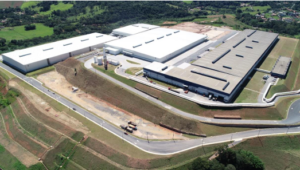
In Osasco, São Paulo, EQC is managing a logistics development currently in the excavation and foundation phase. Its technical role includes managing construction interfaces and assessing the progress of on-site execution activities.
During the early stages of construction, budget or schedule deviations tend to have a proportional impact on subsequent phases. Technical monitoring at this stage helps contain these deviations and maintain the project’s original assumptions.
Technical control applied during the early stages of construction contributes to the predictability of subsequent execution phases.

Structural Progress on a Mixed-Use Building, São Paulo
EQC is managing a mixed-use building in São Paulo, currently progressing through the structural phase with simultaneous work fronts between the 2nd and 3rd basement levels.
In projects with multiple disciplines being executed simultaneously, interface control is essential to maintaining the schedule. On-site technical management ensures team alignment, continuous progress tracking, and productivity validation across the active work fronts.
In projects with multiple simultaneous work fronts, technical coordination is what ensures schedule control.

Corporate Fit-Out | 500 m² Delivered in São Paulo
EQC has completed the delivery of another corporate fit-out project in São Paulo. The scope included the renovation of a 500 m² floor, with technical management throughout the execution stages.
In fit-out projects, technical management must balance three critical requirements: an execution schedule compatible with the client’s operations, compliance with finishing standards, and budget control. The methodology applied by EQC is the same used in larger-scale projects, adapted to the specific scale and schedule of each operation.
Technical rigor is not determined by the scale of a project, but by the methodology applied to its execution.

Technical Decision-Making On-Site: Monitoring and Alignment
On-site technical monitoring is a fundamental part of EQC’s approach. Direct observation of ongoing execution activities, combined with alignment among the teams involved, enables well-informed decision-making regarding the next work fronts.
The construction site is where technical execution takes place. Operational deviations that may not be captured by planning systems become identifiable through on-site monitoring, allowing corrective action to be taken before they affect cost and schedule.
Technical decision-making on-site requires direct verification of actual execution conditions.

Technical Due Diligence for the Acquisition of 11 Logistics Assets
EQC participated in the technical due diligence of a transaction exceeding BRL 1 billion, involving the acquisition of 11 logistics assets in one of the most significant deals in the sector in Brazil.
In transactions of this scale, technical assessment of the assets is essential to informed decision-making. On-site verification of construction conditions, validation of information, and assessment of the associated risks provide the technical support required for highly complex negotiations.
The security of an investment depends on the depth of the technical analysis performed.